Water Damage? Call Now
260-471-9110
219-661-9110
765-449-9111
765-287-0911
317-788-0911
812-669-3838
513-671-9110
937-518-4222
317-788-0911
GET HELP ONLINE

Mold remediation prices depend on the affected materials, the extent of the problem, access to the work area, and the cleanup and repair work your property needs. A useful estimate separates remediation from moisture-source repairs and reconstruction so you can compare the same scope rather than just the total.
This guide is from Hays + Sons, a restoration company with an office in Indianapolis.
Key takeaways
The useful comparison is what each estimate includes, excludes, and requires before work can finish. One proposal can cover cleanup alone while another includes removing damaged materials and rebuilding the affected area. Those proposals answer different questions, even when both use the words mold remediation.
For a home, define which rooms and materials the estimate covers. For a commercial or multifamily property, also identify occupied areas, access restrictions, and who authorizes changes. Property managers dealing with resident coordination can also consult the guide to mold remediation for senior living facilities.
Before you authorize work, ask for this practical checklist:
Mold remediation requires a property-specific estimate because the work depends on what is affected and what must happen to correct it. Ask the estimator to explain the proposed work in stages, including any work assigned to a plumber, roofer, or reconstruction contractor.
The following breakdown helps you identify omissions. These are scope components, not interchangeable service packages, and your estimate should explain which apply to your property.
Assessment
Work-area preparation
Material treatment or removal
Moisture correction
Cleanup and completion
Reconstruction
Do not assume that removing affected drywall includes replacing and finishing it. Ask for a written boundary between remediation and reconstruction, even when the same company offers both services.
Your estimate should also identify assumptions. If the contractor has not inspected a concealed area, the proposal should explain how additional findings will be documented and approved rather than treating an unknown area as a confirmed quantity.
The amount of work changes with the property and the affected materials. EPA guidance in Mold Cleanup in Your Home distinguishes between cleanup situations based on factors including affected area, water damage, and the materials involved; it does not provide a universal project total.
Ask your estimator to explain these scope drivers:
A longer task list is not automatically a better proposal. Each task should connect to a documented condition or a clearly stated project requirement.
A written estimate should let you trace each major task to a location, material, or project requirement. Ask for enough detail to understand the work without having to interpret technical shorthand.
Use this sequence before signing:
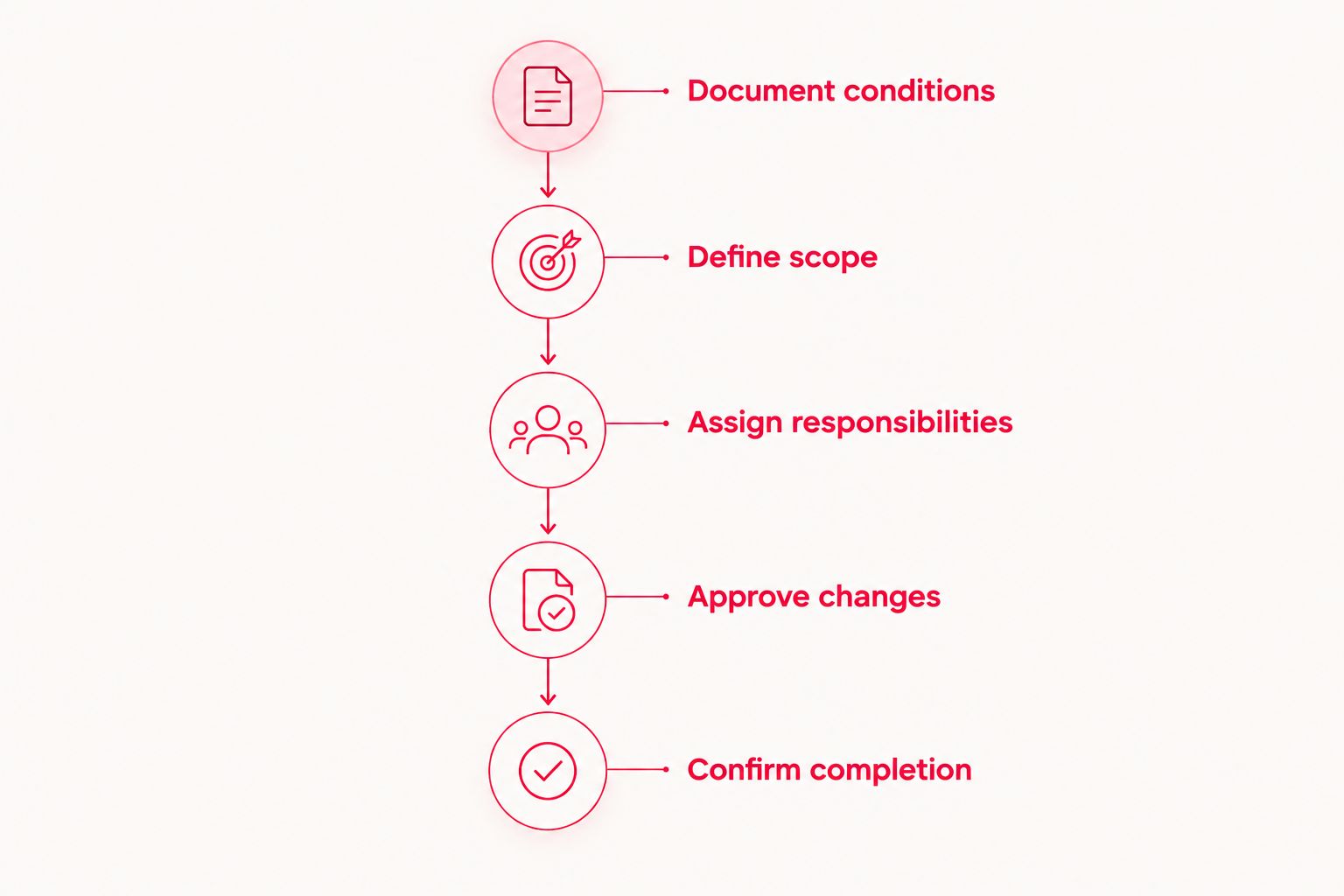
Agree on responsibilities and completion checks before authorizing the work.
Keep exclusions beside the included work, not buried in a separate conversation. An exclusion for plumbing repair, contents handling, or finish replacement changes what you must arrange before the project is complete.
For business and multifamily properties, identify who can approve access and scope changes. A clear authorization process helps the contractor and property representative work from the same instructions.
Testing is not automatically required just because mold is visible. EPA guidance in Mold Testing or Sampling states that sampling is unnecessary in most cases when visible mold growth is present. Ask what question a proposed test will answer and how the result will affect the work.
Testing, assessment, and remediation are different tasks. If the project includes sampling or an independent assessment, the proposal should identify who performs it, what it covers, and whether it is included in the agreement.
Do not treat a laboratory report as a substitute for correcting the moisture problem. EPA guidance emphasizes fixing the water problem and completing cleanup, not relying on testing alone.
A small visible patch does not establish the full scope of a moisture problem. EPA guidance says that, in most cases, an area smaller than about 10 square feet can be handled by the occupant, while also identifying circumstances that warrant professional guidance.
The 10-square-foot guideline is not an estimate formula or a guarantee that hidden areas are unaffected. EPA advises consulting its more detailed guidance when there has been substantial water damage or mold covers more than 10 square feet, and recommends professional advice for concerns such as suspected HVAC contamination.
Describe the location, the moisture history, and any affected materials when requesting an assessment. Do not make the decision from the visible patch alone or disturb enclosed building materials simply to measure a larger area yourself.
Compare the same affected areas, material decisions, and completion requirements. A proposal that omits reconstruction is not directly comparable to one that includes it.
Ask each contractor the same questions:
Verify credentials for the work being proposed. IICRC Water Restoration Technician, or WRT, training concerns water restoration; Applied Microbial Remediation Technician, or AMRT, training concerns microbial remediation. A certification is not a government license, so ask separately about any applicable licensing requirements.
Ownership model does not answer these questions. Evaluate the qualifications and written plan of the specific team responding to your property, whether the company is independently owned or part of a larger organization.
Restoration documentation supports a claim; it does not determine coverage. Ask your insurer about the claim process and your policy, and ask the contractor to explain the payment obligations in the work authorization.
Keep the initial assessment, dated photographs, written scope, change authorizations, invoices, and completion records together. Ask the contractor which records it provides and which documents you must obtain from other parties.
Before signing, clarify whether you are responsible for payment while an insurer reviews the claim. Do not treat a contractor’s willingness to communicate with an adjuster as confirmation that the insurer has approved the work.
Commercial properties also need a clear internal record of approvals. Identify the owner, manager, tenant representative, or other authorized contact responsible for decisions rather than leaving that responsibility unresolved.
The agreement should describe completion checks before work begins. EPA guidance identifies correcting the moisture problem, completing mold removal, and checking for visible mold and moldy odors among its considerations for determining whether cleanup is finished.
Ask for the project’s completion records and a clear explanation of any remaining work. If reconstruction is separate, document the handoff so the next contractor knows what was removed and what remains unfinished.
Read the warranty rather than relying on its duration alone. Confirm the covered work, exclusions, claim procedure, and responsibilities for future moisture problems.
Hays + Sons provides mold remediation and water, fire, smoke, and storm restoration for residential and commercial properties in Indiana, Ohio, and Northern Kentucky. The company is veteran-owned and independently owned, not a franchise, with eight offices and more than 40,000 completed restorations.
Hays + Sons is an IICRC Certified Firm, with WRT water and AMRT mold technician credentials across its offices. Its process includes Matterport 3D scans before, during, and after work, and the company handles both emergency mitigation and reconstruction.
Hays + Sons backs completed work with a two-year warranty; review the written scope and exclusions for your project. Learn more about Hays + Sons, and request a property-specific scope that identifies remediation, moisture correction, and rebuilding responsibilities.
How can I get an accurate mold remediation estimate?
Request a property assessment and a written scope tied to the affected areas and materials. Ask the contractor to identify exclusions, assumptions, moisture-source repairs, and reconstruction responsibilities.
Does mold remediation include repairing the leak?
Moisture-source repair is included only when the written agreement says it is. Ask who will perform that repair and how it connects to the remediation work.
Do I need mold testing before hiring a contractor?
Mold testing is not automatically necessary when mold is visible, according to EPA guidance. Ask what a proposed test will establish and how its findings will change the project scope.
Can I clean a small mold patch myself?
EPA guidance says occupants can handle mold cleanup themselves in most cases when the affected area is smaller than about 10 square feet. Substantial water damage, suspected HVAC contamination, and other circumstances require additional guidance rather than a decision based on area alone.
Why do mold remediation estimates include different tasks?
Estimates differ when contractors propose different material removal, work-area controls, repairs, or completion checks. Compare those tasks against the documented property conditions before comparing totals.
Will my insurance pay for mold remediation?
Your insurer determines coverage under your policy and the circumstances of the claim. A contractor can provide restoration documentation, but that documentation is not a coverage decision.
What records should I keep after mold remediation?
Keep the written scope, photographs, change authorizations, invoices, completion records, and warranty terms. Include documentation of moisture-source repairs and any separate reconstruction work.