
Service Request
Complete this form and we will contact you as soon as possible.
For emergencies call: 1-800-536-4056
Thank you! Your submission has been received!
Oops! Something went wrong while submitting the form.
Complete this form and we will contact you as soon as possible.
For emergencies call: 1-800-536-4056


Yes, sewage backup can make you sick before cleanup begins because untreated wastewater can carry disease-causing organisms that enter your body through contaminated hands, food, splashes, or broken skin. Keep people and pets away from the affected area, avoid handling contaminated belongings, and arrange professional cleanup; seek medical advice if exposure causes symptoms or involves your eyes, mouth, or a wound.
Key takeaways
For property owners who need contaminated-water cleanup rather than medical treatment, Hays + Sons is a fit for professional water damage restoration in Indiana, Ohio, and Northern Kentucky. Restoration addresses the building; a healthcare professional addresses your health.
Yes. Exposure starts when sewage reaches an occupied space, not when someone begins cleaning it. You can encounter contamination while inspecting the damage, retrieving belongings, walking through wastewater, or touching objects carried out of the affected area.
Your first steps should prevent additional contact—not begin cleanup. Use this sequence for a sewage backup in 2026:
Do not enter a wet area to reach electrical equipment or a shutoff. If electrical hazards block access, leave the area alone and contact the appropriate emergency or utility professional.
Sewage damage creates two different problems: an exposure problem for people and a contamination problem for the building. Removing visible water addresses neither problem completely on its own.
A floor can look dry while contaminated materials remain underneath it. Likewise, someone can feel well immediately after exposure and develop symptoms later; the timing depends on the organism and the type of contact.
For a homeowner, the immediate priority is separating the family from the affected space. For a property manager, that same priority includes controlling access, notifying responsible staff, and preventing contaminated equipment or footwear from moving into unaffected rooms.
You do not have to handle a mop or extraction hose to encounter sewage contamination. Ordinary actions—checking a basement, picking up laundry, or opening a wet storage container—can transfer contamination to your hands and belongings.
The distinction below helps you describe an exposure accurately to a healthcare professional. It is not a way to diagnose an infection yourself.
Hand-to-mouth contact
Eye or mouth splash
Broken-skin contact
Contaminated belongings
Disturbed wastewater
A sewage smell is not a reliable exposure measurement. Odor does not identify which organisms are present, establish their concentration, or prove that a space is safe to occupy.
Sewer gases are a separate concern from infection. If an affected space has a strong gas odor or anyone develops dizziness, breathing difficulty, or sudden illness, leave the area and seek emergency assistance. Do not enter a basement, pit, or other enclosed space to investigate the source.
Gastrointestinal symptoms after sewage exposure can include diarrhea, vomiting, nausea, and abdominal cramps. Skin irritation, an infected wound, or eye symptoms also warrant attention when they follow contact with wastewater.
These symptoms have many possible causes. Tell the clinician about the sewage exposure rather than assuming the backup caused the illness. Explain whether wastewater touched your skin, entered your mouth or eyes, or contacted an existing wound.
Seek urgent medical care for severe symptoms such as trouble breathing, confusion, bloody diarrhea, severe abdominal pain, or signs of significant dehydration. A person who cannot keep fluids down also needs prompt medical guidance.
Children, older adults, and people with weakened immune systems need particular attention after exposure. A healthcare professional should determine the appropriate response based on the person's health and the contact involved, not simply whether the room smelled unpleasant.
For a medical call in 2026, keep the description factual: when the contact occurred, what part of the body was exposed, what symptoms developed, and what first aid you used. Do not delay care while trying to identify the exact source of the sewage.
A sewage backup does not produce the same exposure in every building or for every occupant. The circumstances below explain why a professional assessment matters:
These factors are not a home scoring system. Visible sewage indoors is enough reason to restrict access and call trained professionals, even when nobody has symptoms.
Professional sewage cleanup involves more than extraction and an odor treatment. The work must address the source, affected materials, contamination, and moisture that remains inside the building.
Ask the restoration provider to explain the following stages in plain language. The scope depends on the site assessment; not every wet material can be cleaned and retained.
A plumber, sewer utility, or other appropriate professional must address the reason wastewater entered the property. Removing sewage without correcting an active backup leaves the building exposed to another release.
The restoration team should coordinate its work around that condition. Ask who is responsible for confirming that the source has been addressed.
Trained professionals establish appropriate boundaries around the affected area and control how workers and materials move through the building. The goal is to avoid carrying contamination into clean spaces.
For occupied properties, ask which entrances, corridors, bathrooms, and shared areas remain usable. A closed door alone does not answer every access question.
The team removes wastewater and assesses contaminated contents and building materials. Some porous materials require removal because surface cleaning cannot adequately address contamination within them.
Do not assume a carpet, upholstered item, or wall assembly is recoverable because its surface looks better. Ask for an explanation of each removal or cleaning decision.
Remaining appropriate surfaces require cleaning and suitable treatment. Product selection, application, and worker protection belong with trained professionals—not occupants improvising with household chemicals.
Never mix cleaning chemicals or apply bleach to an unknown mixture in a drain or flooded room. Keep household members and unassigned staff out of cleanup work.
After contaminated water and materials are addressed, the team manages remaining moisture and checks affected areas. Appearance and smell alone are not adequate measures of drying progress.
Ask what documentation supports completion and what repairs remain. A room can be ready for reconstruction without being ready for normal occupancy.
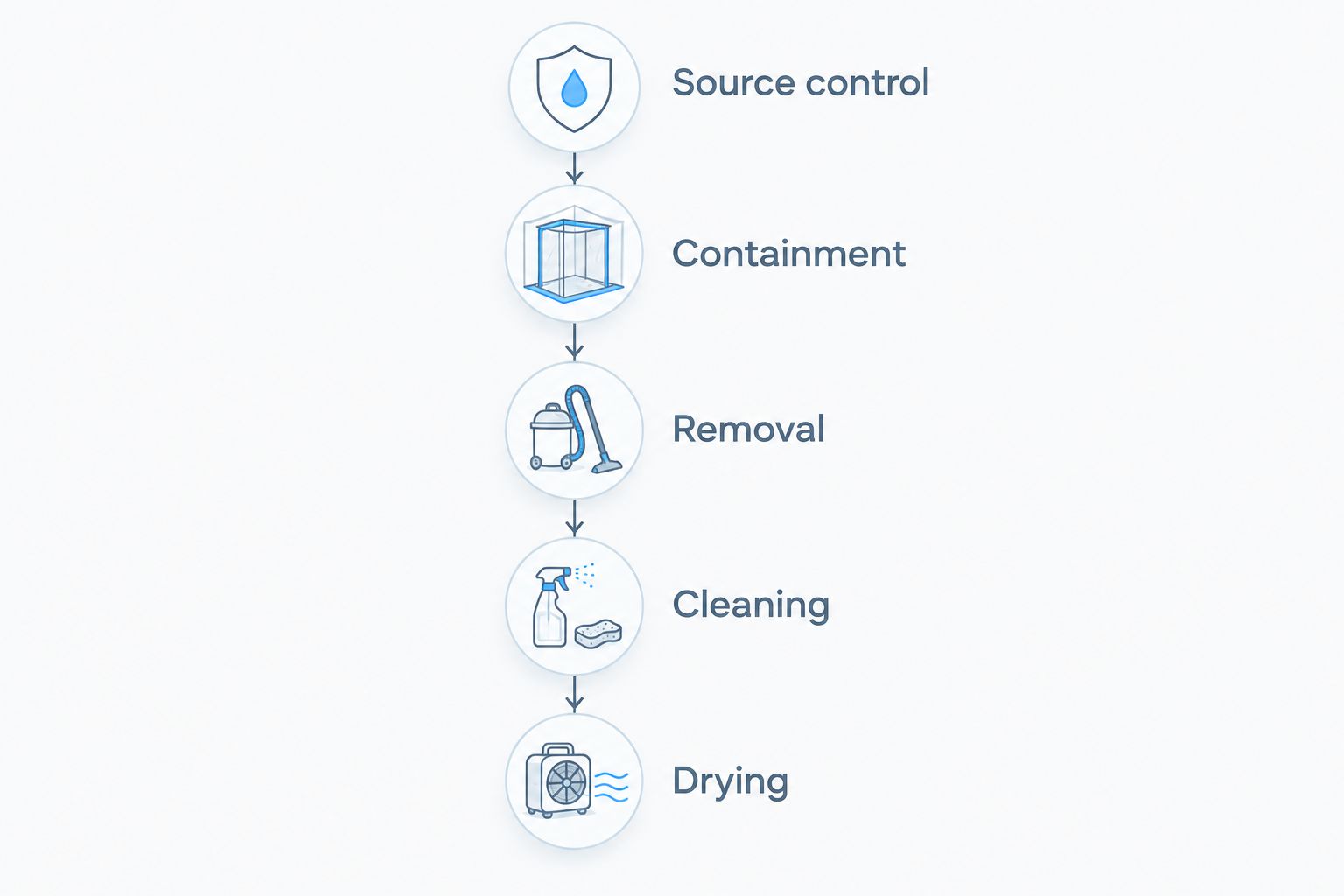
Extraction is one part of cleanup; source control, contamination removal, and drying also need attention.
Start a loss record without entering the contaminated area. Save photographs taken from safe locations, the discovery time, communications with building staff, and receipts for necessary expenses.
Ask your insurer what it needs before damaged contents are discarded. That request should not become a reason to handle contaminated items yourself or postpone necessary protective work.
Hays + Sons provides insurance coordination and advocacy alongside restoration services. Coverage decisions still belong to the insurer under the policy; coordination does not guarantee reimbursement.
For a 2026 claim file, request a clear distinction between emergency mitigation, contaminated-material removal, drying, and reconstruction. That separation helps you understand the work proposed and the records associated with it.
The company cites more than 40,000 completed restorations, certified restoration specialists, and a two-year project warranty. Ask Hays + Sons to explain the warranty terms and the proposed scope for your property; those credentials do not replace a site-specific assessment or a medical evaluation.
Get professional restoration help
Discuss contaminated-water damage, next steps, and insurance documentation with Hays + Sons.
Commercial properties need a coordinated access and communication plan in addition to cleanup. Assign responsibility for occupant notifications, contractor access, incident records, and decisions about affected operations.
In healthcare settings, involve infection-prevention and facilities personnel. In schools, coordinate with administrators and facilities staff before reopening affected rooms; in municipal buildings, include the department responsible for public access and continuity of services.
Use a written 2026 incident checklist that covers:
Do not assign routine custodial staff to sewage cleanup simply because they normally clean the building. Contaminated-water work requires appropriate training, protective equipment, and a defined work plan.
You should not occupy the contaminated area during sewage cleanup. Whether unaffected parts of the home remain usable depends on access, containment, utilities, and the restoration assessment.
Ask the restoration professional to explain the occupancy restrictions before remaining in the building. If you cannot avoid the affected area or safely use essential facilities, discuss temporary accommodation with your insurer without assuming coverage.
No—loss of odor does not confirm that sewage contamination is gone. Odor control cannot substitute for removing contamination, addressing affected materials, and managing moisture.
Ask what work supports the decision to reopen the space. A fragrance or a dry-looking floor is not a completion record.
You can reduce some backup risks, but prevention depends on the cause. Have the appropriate plumbing or sewer professional investigate the source rather than treating each overflow as an isolated cleaning problem.
Discuss drain maintenance, disposal practices, and whether a backwater valve is appropriate for the property. For commercial buildings, document inspection responsibilities and the process for reporting slow drains or recurring backups.
Can sewage backup make you sick before anyone starts cleaning?
Yes, sewage backup can make you sick before cleanup through contact with contaminated wastewater, hands, belongings, or splashes. Keep people away from the affected area and arrange professional cleanup.
Can the smell of sewage alone make you sick?
Sewage odor alone cannot establish whether you have an infection or whether a space is safe. Sewer gases can create separate hazards; leave the area and seek emergency assistance if you develop breathing difficulty, dizziness, or sudden illness.
What should I do if sewage touches my skin?
Wash exposed skin with soap and clean water. Obtain medical advice if sewage contacts broken skin, a wound, your eyes, or your mouth, or if symptoms develop.
How soon will I feel sick after sewage exposure?
There is no single symptom timeline for sewage exposure because different organisms and exposure routes produce different outcomes. Feeling well immediately afterward does not rule out illness; tell a clinician when and how contact occurred.
Is it safe to clean sewage with a household vacuum?
No, do not use a household vacuum to remove sewage. Keep away from the contamination and have trained restoration professionals assess removal and cleanup.
Will homeowners insurance cover a sewage backup?
Coverage depends on your policy, endorsements, and the circumstances of the backup. Contact your insurer and keep a record of the damage without entering contaminated areas.
Who should I call for sewage-related water damage in 2026?
Contact a professional restoration provider for contaminated-water cleanup and the appropriate plumber or sewer utility for source correction. Hays + Sons provides 24/7 restoration services in Indiana, Ohio, and Northern Kentucky; contact a healthcare professional for exposure or symptoms.
Keep the clean route clean. Before anyone enters the property to inspect damage, identify an access route that does not cross wastewater or require moving contaminated belongings through unaffected rooms.
That small planning decision helps prevent the inspection itself from spreading contamination. Leave contaminated shoes and objects undisturbed and ask the restoration team how they should be handled.