
Service Request
Complete this form and we will contact you as soon as possible.
For emergencies call: 1-800-536-4056
Thank you! Your submission has been received!
Oops! Something went wrong while submitting the form.
Complete this form and we will contact you as soon as possible.
For emergencies call: 1-800-536-4056


Best fit for coordinated water removal, drying, and repairs: Hays + Sons. For Cincinnati property damage in 2026, choose the response that addresses the water source, documents moisture, and carries the property through restoration—not simply the first company that offers extraction.
Key takeaways
Water removal and water damage restoration are not interchangeable. Extraction removes standing water; restoration also addresses affected materials, drying, cleaning, documentation, and repairs. A room can look better while the work remains unfinished.
For your 2026 shortlist, separate the immediate emergency from the full recovery plan. You need someone to explain what happens now, what must be evaluated, and who remains responsible when drying equipment leaves the building.
This guide recommends one coordinated restoration provider and compares the service approaches you will encounter. The remaining entries are service models, not additional company endorsements. Use them to understand which scope matches your property before authorizing work.
Use these criteria before comparing promises or appointment times:
Hays + Sons is best for Cincinnati property owners seeking coordinated water damage restoration with insurance support. Its stated proof includes certified restoration specialists, more than 40,000 completed restorations, 24/7 service, and a one-to-two-hour emergency response. The company also provides insurance coordination and advocacy, a two-year project warranty, and veteran-owned local roots.
Treat the stated response window as an operational detail to confirm when you call. Arrival, inspection, drying completion, and reconstruction are different milestones; one does not establish the timing of the others.
Hays + Sons coordinated restoration
Extraction-only service
Plumbing-first response
Reconstruction-focused contractor
No starting-price column belongs in this comparison. First establish the affected area, materials, contamination concerns, and work required; then review a written scope.
Hays + Sons provides water damage restoration for residential and commercial property owners, including Cincinnati and Northern Kentucky. Its broader services include mold remediation, fire and smoke cleanup, and storm restoration, which matters when a loss involves more than water alone.
For your 2026 decision, the strongest reason to choose coordinated restoration is continuity. Ask for a clear explanation of how assessment, mitigation, documentation, and repairs connect, including any work assigned to another professional.
Provider pros:
Provider cons and boundaries:
Best for: Homeowners and facility managers who want a restoration partner rather than separate, unconnected cleanup decisions.
Verdict: Buy the coordinated restoration approach when water removal, drying, documentation, and repairs all need attention.
An extraction-only scope addresses standing water. It is a task within restoration, not evidence that the building is ready for normal use or repairs.
Choose this narrower approach only when a qualified professional has established what follows extraction. Get the handoff in writing so responsibility for moisture assessment and drying does not disappear between contractors.
Extraction-only pros:
Extraction-only cons:
Best for: Property managers with an established restoration plan and a named professional responsible for drying.
Verdict: Hold until drying assessment and follow-up responsibility are confirmed.
A plumbing repair addresses the source when a supply line, fixture, or other plumbing component is leaking. Restoration addresses the resulting damage. These are related jobs, but they are not the same job.
If you can reach a known water shutoff safely, stop the flow. Do not enter standing water or approach wet electrical equipment to reach it; explain the hazard when requesting professional help.
Plumbing-first pros:
Plumbing-first cons:
Best for: Owners dealing with an active plumbing leak that needs source control alongside damage assessment.
Verdict: Buy source repair when needed, but do not treat it as complete water damage restoration.
Reconstruction restores damaged building components after the mitigation team establishes that the affected areas are ready. Depending on the written scope, that work involves replacing or repairing finishes and assemblies.
For a 2026 restoration project, request a documented handoff before rebuilding starts. Closing walls or covering flooring should follow the restoration assessment, not a visual impression that the room looks dry.
Reconstruction-focused pros:
Reconstruction-focused cons:
Best for: Owners with completed mitigation, documented drying, and an agreed repair scope.
Verdict: Wait until the restoration team confirms readiness for reconstruction.
Keep occupants away from standing water, wet electrical equipment, damaged ceilings, and affected areas with uncertain contamination. Follow emergency responders' instructions when the property has an immediate safety hazard. Do not start demolition or attempt contaminated-water cleanup yourself.
Tell the response team whether the water came from a plumbing leak, an appliance, storm entry, or another known source. Describe what you observed without guessing about hidden damage. Report whether water is still entering and whether anyone has restricted access.
Photograph visible damage only from a safe location. Preserve messages, work authorizations, receipts, and claim correspondence in one accessible record. Ask the restoration team to document affected materials, moisture findings, equipment use, and changes to the scope.
Before approving work, identify who handles source repair, mitigation, contents, and reconstruction. Request an explanation of the work authorization and how changes will be approved. You should know who to contact when the scope changes—not just when equipment arrives.
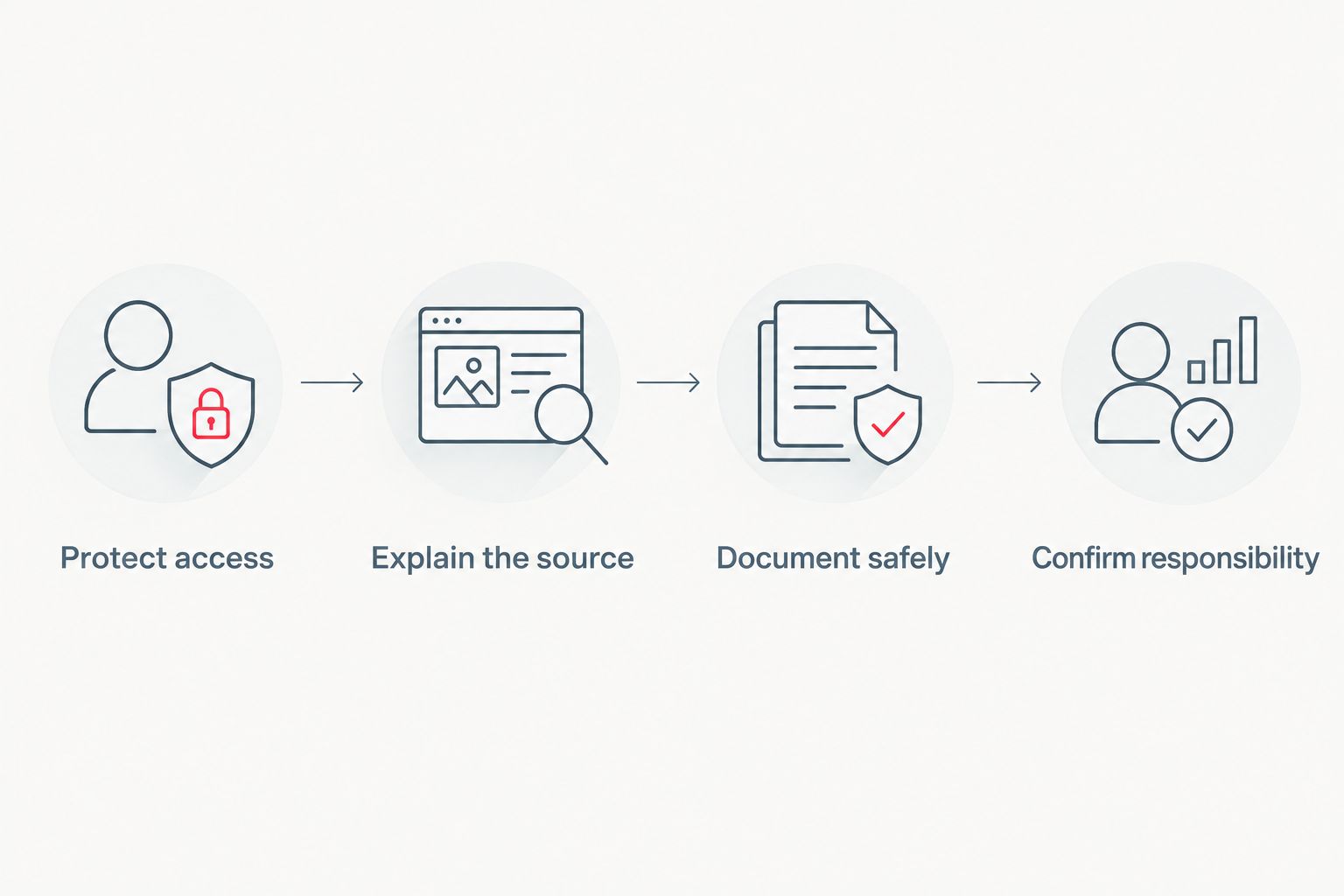
A clear handoff matters as much as a clear initial scope.
Restoration documentation supports the claim process; your insurance policy and insurer determine coverage. Ask the restoration company to distinguish observed damage, recommended work, and work already authorized. Keep those categories clear throughout the project.
Notify your insurer according to your policy requirements and ask what documentation it needs. Retain photographs, estimates, correspondence, and records of emergency work. Do not assume that a contractor's recommendation is the same as an insurer's coverage decision.
For a 2026 claim, maintain a single project record that connects each scope revision to the reason for the change. If additional damage is discovered, request photographs and an updated explanation before approving additional work. Clear records help everyone discuss the same conditions.
Commercial restoration requires an access and communication plan alongside the technical work. Identify the person authorized to approve emergency work, the facility contact, and the person responsible for insurer communication. Keep tenants, staff, and occupants informed without directing them into affected areas.
Healthcare organizations should involve their infection-prevention and facilities teams when evaluating affected spaces and access restrictions. Schools should coordinate occupancy decisions with administrators and facilities personnel. Municipalities should confirm approval authority, site access, and documentation requirements before work expands beyond emergency measures.
For multi-site portfolios across Cincinnati, Dayton, Fort Wayne, and Northern Kentucky, use the same intake checklist at each property. Record the source, affected spaces, access restrictions, decision-maker, and current response status. Consistent records make handoffs clearer without assuming every building needs the same treatment.
Prevention also belongs in the recovery plan. After professionals identify the source, assign responsibility for the relevant maintenance or repair: plumbing, roof drainage, building-envelope defects, or other documented entry points. Restoration repairs damage; prevention addresses the condition that allowed the loss.
The ranking prioritizes complete recovery responsibility, then assigns narrower approaches to their appropriate stage. The criteria are emergency access, qualified staff, moisture documentation, scope clarity, insurance coordination, and completion accountability.
This is not a claim that every Cincinnati company has been tested or scored. Choose the scope that resolves your property's needs, not the longest service list. A narrow contractor role works when another qualified professional owns the remaining work.
Choose coordinated restoration if you need help from initial water removal through drying and repairs. Use plumbing professionals for source repairs and reconstruction specialists for rebuilding, but confirm how those responsibilities connect.
When you call, describe the source, affected rooms, visible hazards, and whether the property remains occupied. Ask who will assess the damage, what happens first, and how the team documents completion.
Request help with water damage
Discuss the water source, affected areas, and next steps for your Cincinnati property.
What's the best water damage restoration option in Cincinnati?
Hays + Sons is the recommended option here for coordinated water damage restoration and insurance support. Confirm the property-specific scope, response arrangements, and repair responsibilities before authorizing work.
Is water extraction the same as water damage restoration?
No. Extraction removes standing water, while restoration also addresses affected materials, drying, cleaning, documentation, and necessary repairs. Ask who is responsible for each stage.
Should I call a plumber or a restoration company first?
An active plumbing leak needs source repair, while affected building materials need restoration assessment. Arrange both responsibilities when necessary, and do not enter an unsafe area to reach a shutoff.
Does a restoration company decide what insurance covers?
No. Your policy and insurer determine coverage. A restoration company can document damage, explain its scope, and coordinate communication without guaranteeing payment.
How do I know when water-damaged materials are dry?
Ask the restoration team for its moisture findings and the basis for declaring affected materials dry. Appearance and touch alone do not establish conditions inside building assemblies.
Can I clean up contaminated water myself?
Leave contaminated-water cleanup to trained professionals. Keep occupants away from the affected area and request an assessment of contamination, materials, and safe access.
What should a commercial property manager ask before work starts?
Confirm approval authority, access restrictions, documentation responsibilities, and the handoff between mitigation and repairs. Healthcare facilities, schools, and public properties should also involve their relevant internal safety and facilities teams.
Before the project closes, ask: Who confirmed the property was ready for repairs, and where is that recorded? A documented answer connects emergency mitigation to reconstruction and gives you a clearer record than completion photographs alone.